2011/07/10

なう a new Japanese word ending


先日、あるブログを読んでいたら時々でてくる語尾に付く「なう」。

意味を調べてみると、ツィッター大流行で使われ始めたことば

で、「今~しています」という現在進行形の意味で、英語の「now

からきているそうです。

 主に名詞の後に「なう」と付けるそうですが、みんな自由に語尾に

付けて使っているそうです。例えば、

「渋谷なう」は「今、渋谷にいます」

「すし食べるなう」は「今、すしを食べています」

日本語学習者同士でしたら、「日本語なう」で「今、日本語を勉強し

ています」や「今、日本語を話しています」等でしょうか。

140字以内という制限のあるツィッターに、できるだけ短い表現で

行うために自然発生的に出現してきたそうで、「ナウ」とカタカナ

するのではなく、ひらがな表記のままというのも、できるだけ早く

自分の思いをつぶやきたいという表われかもしれない。とのことで

す。

あまり感心されないという意見もあるそうですが、私は密かに「マ

イブームなう」です。


____________________________________
Kanji with hiragana


先日(せんじつ)、あるブログを読(よ)んでいたら時々(ときどき)で

てくる語尾(ごび)に付(つ)く「なう」。

意味(いみ)を調(しら)べてみると、ツィッター大流行(だいりゅ

うこう)で使(つか)われ始(はじ)めたことばで、「今(いま)~してい

ます」という現在進行形(げんざいしんこうけい)の意味(いみ)で、

英語(えいご)の「now」からきているそうです。

主(おも)に名詞(めいし)の後(あと)に「なう」と付(つ)けるそうで

すが、みんな自由(じゆう)に語尾(ごび)に付(つ)けて使(つか)っ

ているそうです。例(たと)えば、

「渋谷(しぶや)なう」は「今(いま)、渋谷(しぶや)にいます」

「すし食(た)べるなう」は「今(いま)、すしを食(た)べています」

日本語学習者同士(にほんごがくしゅうしゃどうし)でしたら、「日本

語(にほんご)なう」で「今(いま)、日本語(にほんご)を勉強(べん

きょう)しています」や「今(いま)、日本語(にほんご)を話(はな)し

ています」等(など)でしょうか。

140字以内(じいない)という制限(せいげん)のあるツィッターに、

できるだけ短(みじか)い表現(ひょうげん)で行(おこな)うために

自然発生的(しぜんはっせいてき)に出現(しゅつげん)してきたそ

うで、「ナウ」とカタカナ変換(へんかん)するのではなく、ひらがな 

表記(ひょうき)のままというのも、できるだけ早(はや)く自分(じぶ

ん)の思(おも)いをつぶやきたいという表(あらわ)れかもしれな

い。とのことです。

あまり感心(かんしん)されないという意見(いけん)もあるそうです

が、私(わたし)は密(ひそ)かに「マイブームなう」です。

____________________________________

English translation


The other day I was a reading a blog, a certain word ending seemed 

to appear occassionally this was the ending [nau or なう]
 
I looked up the meaning and found that it had started to be widely 

used when Twitter began to gain popularity and that it indicated the 

present continuous tense – ie “I am doing something at this time” 

and is derived from the English word [now] .

It is mainly found being used after a noun, but it is being used by 

everyone quite freely as a general ending of sorts. So for example:-

Shibuyaなう” means – I am in Shibuya at the moment.
Sushi taberuなう” means – I am eating sushi .

With a fellow Japanese language student you could send a message 

“Nihongoなう” which could mean either that – I am currently 

studying Japanese - or that I am speaking Japanese at the moment.

This use of なうappeared naturally within the 140 word limit in 

Twitter, and the need to keep expressions as short as possible. And 

people don't type ナウ using Katakana but type なうusing the 

Hiragana which I think could be an expression of the sentiment that 

one wants to mumble one's message out as quickly as possible.

There are some who are of an opinion that this new language is not 

agreeable, but for me personally, its become my secret fad !

___________________________________


今週(こんしゅう)の語彙(ごい)
This week's vocabulary


■ブログ  blog


ツィッター twitter


■流行(りゅうこう) vogue, craze, popularity


制限(せいげん)restriction, limit,


出現(しゅつげん) appearance, birth


変換(へんかん) change


表記(ひょうき) representation


つぶやく mumble


感心(かんしん) impress, agree


密(ひそ)かに privately


By KAN Sayoko


2011/07/02

虫除け Japanese insect repellant


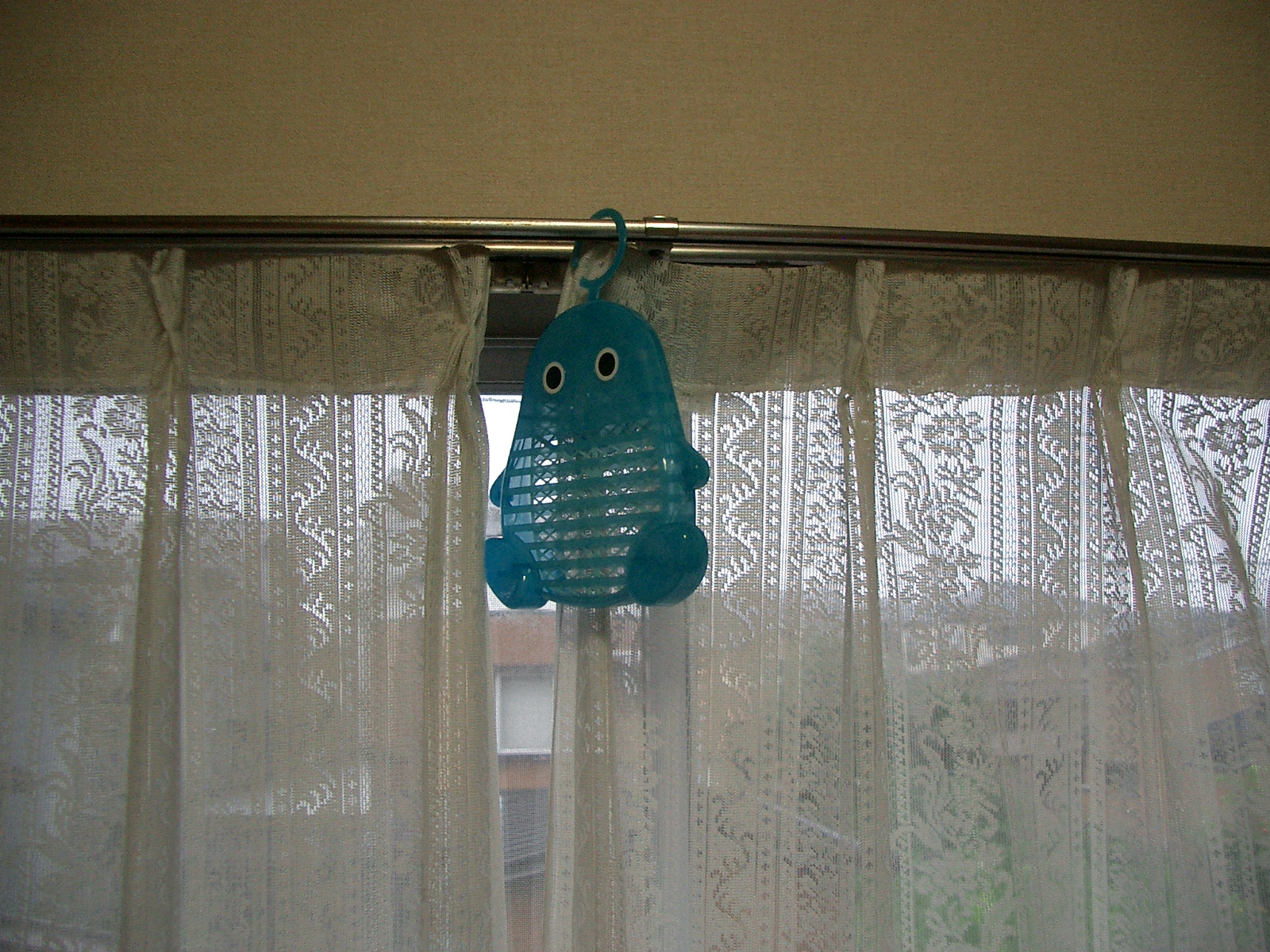
この写真部屋です。何がぶらさがっていると思(おも)いますか?「芳香剤?」と思う人もいるかもしれませんね。
日本に住んでいる人、日本人の人はご存知でしょうが、実はこれ、虫除けなんです。このケースの中に、のフィルムがあり、が近づかないようになっているんです。蚊取り線香の方がが出るので効き目がありそうに感じるかもしれませんが、こちらの方がよく効きます。2か月くらい効くそうです。
火を使わないため、火事の心もなく、煙でのど痛めることもないので、本当に便利です。みなさんの国でもこのようなものを使っていますか?
_________________________________
Kanji with hiragana

この写真(しゃしん)は私(わたし)の部屋(へや)の窓(まど)です。何(なに)がぶらさがっていると思(おも)いますか?「芳香剤(ほうこうざい)?」と思(おも)う人(ひと)もいるかもしれませんね。
日本に住(す)んでいる人、日本人の人(ひと)はご存知(ぞんじ)でしょうが、実(じつ)はこれ、虫除(むしよ)けなんです。このケースの中に、薬(くすり)のフィルムがあり、虫(むし)が近(ちか)づかないようになっているんです。蚊取(かと)り線香(せんこう)の方(ほう)が煙(けむり)が出るので効(き)き目(め)がありそうに感(かん)じるかもしれませんが、こちらの方がよく効きます
2か月くらい効くそうです。
火を使わないため、火事(かじ)の心配(しんぱい)もなく、煙(けむり)でのど痛(いた)めることもないので、本当(ほんとう)に便利(べんり)です。みなさんの国(くに)でもこのようなものを使(つか)っていますか?
____________________________________
English translation


This is a photo taken in my room. What do you thing that thing is hanging over there ? I guess some people will guess that , “It's something aromatic ?”

Japanese people and people living in Japan will probably know what it is, but actually it is an insect repellant. Inside this case is a film of medicinal chemicals that keeps bugs from getting close to it. You may think that a mosquito coil would be more effective since smoke comes out of it, but this method is actually the more effective one. It lasts for 2 whole months.

And, since there is no need for a flame, the worry of a house fire is unnecessary too, and adding the fact that due to the lack of smoke, there are no more sore throats either, makes this a very convenient device.
Do you use similar devices in your country ?
___________________________________

今週(こんしゅう)の語彙(ごい)
This week's vocabulary


■写真(しゃしん):a photo

■部屋(へや):a room

■窓(まど):a window

ぶらさがっている : hanging

芳香剤(ほうこうざい): aromatic scent ,

■ご存知(ぞんじ):know 「知()る」の尊敬語(そんけいご)honorifics

■実(じつ)は:to tell the truth

■虫除(むしよ)け:an insect repellent

■薬(くすり):a medicine

■虫(むし):an insect

■蚊取(かと)り線香(せんこう):a mosquito coil

■煙(けむり):smoke

■効(き)き目(め):effectiveness

■効(き)く:be effective

■火事(かじ):a fire

■心配(しんぱい):anxiety

■のど:the throat

■のどを痛(いた)める:have a raw throat


 By FUJINAWA Miyako


2011/06/25

七夕祭り Tanabata star festival


77日は七夕です。七夕の伝説を知っていますか?

働き者の織姫<ベガ>と彦星<アルタイル>は一緒にいると楽しくて、仕事をしなくなってしまいました。そして、天の川によって離れ離れにされてしまいました。77日は、引き離された織姫と彦星が1年に1度会える日です。

七夕には笹の枝に飾りつけをして、二人の再会を祝います短冊に願い事を書いて、ぶらさげる願いが叶うと言われています。私が育った、宮城県仙台市では有名な七夕祭りがあります。毎年多くの人たちで、にぎわいます。商店街の人たちが心をこめて作った七夕飾りはまさに芸術です。私が学生のころは、「仙台七夕を見ると、受験に失敗する」というジンクスがありました。本当かどうかはさておき、みなさんもぜひ仙台七夕を見にきませんか?

参考サイト
____________________________________

Kanji with hiragana


七夕祭(たなばたまつ)り

77日は七夕です。七夕の伝説(でんせつ)を知(し)っていますか?

働(はたら)き者(もの)の織姫(おりひめ)<ベガ>と彦星(ひこぼし)<アルタイル>は一緒(いっしょ)にいると楽(たの)しくて、仕事(しごと)をしなくなってしまいました。そして、天(あま)の川(がわ)によって離(はな)れ離(ばな)れにされてしまいました。77日は、引(ひ)き離(はな)された織姫と彦星が1年(ねん)に1度(ど)会(あ)える日(ひ)です。

七夕には笹(ささ)の枝(えだ)に飾(かざ)りつけをして、二人(ふたり)の再会(さいかい)を祝(いわ)います短冊(たんざく)に願(ねが)い事(ごと)を書(か)いて、ぶらさげる願いが叶(かな)うと言(い)われています。私(わたし)が育(そだ)った、宮城県仙台市(みやぎけんせんだいし)では有名(ゆうめい)な七夕祭りがあります。毎年(まいとし)多(おお)くの人(ひと)たちで、にぎわいます。商店街(しょうてんがい)の人たちが心(こころ)をこめて作(つく)った七夕飾りはまさに芸術(げいじゅつ)です。私が学生(がくせい)のころは、「仙台七夕を見(み)に行(い)くと、受験(じゅけん)に失敗(しっぱい)する」というジンクスがありました。本当(ほんとう)かどうかはさておき、みなさんもぜひ仙台七夕を見にきませんか?

参考(さんこう)サイト
____________________________________

English translation


The 7th of July is Tanabata star festival . Do you know the legend of Tanabata ?

The hardworking weaver named Orihime (star of Vega ) and her lover Hikoboshi (star of Altair) enjoyed the time they spent together so much that they stop working altogether. So they were separated by the Milky Way ( Ama no Gawa . On July 7th for this one day in a year, they were allowed to meet.

On this day it is the custom to hang decorations from the branches of bamboo trees to celebrate the reunion of the couple. If you write your wishes on strips of paper and hang them up, they apparently your wishes can come true. In Sendai city in Miyagi Prefecture, where I was raised, there is a famous Tanabata festival held. Every year it is bustling full of people. The Tanabata decorations made by the local shopping district traders are truly a work of art.
In my student days, there was a jinx that people often told about, that “if you go to see the Tanabata festival (during the exam period) you will fail your exams” ! But setting aside whether this is true or not, why don't you go over and see the Tanabata festival ?

Reference site

___________________________________

今週(こんしゅう)の語彙(ごい)
This week's vocabulary


伝説(でんせつ)
legend

天(あま)の川(がわ)
the Milky Way

離(はな)れ離(ばな)れ
separate , scattered

引(ひ)き離(はな)す
to pull apart ,to separate

笹(ささ)の枝(えだ)
bamboo branches

祝(いわ)う
to celebrate

短冊(たんざく)
a strip of paper

ぶらさげる
to hang

願いが叶(かな)う
one's wishes come true, one's wish is realized

にぎわう
to be crowded with people

心(こころ)をこめて
wholeheartedly ,with all one's heart

まさに
exactly ,just

芸術(げいじゅつ)
art

ジンクス
jinx

さておき
apart from, setting aside


By NAKAJIMA Shiho


2011/06/19

桜島 Sakura Jima – an active volcano


私の住んでいる鹿児島市には「桜島」という火山があります。
桜島は今も活動中の火山で、今日も噴火しました。

桜島が噴火すると、火山灰が街のほうへやってくるのでとても困ります
もし洗濯物やふとんを外に干していたら、汚れてしまうので、やり直しをしなければいけません。車はあっという間に真っ黒になります。夏になれば、汗ばんだ肌に火山灰がひっつくので気持ち悪いし、女性は化粧直しを何回もしなければなりません。
雨がふったら傘が必要ですが、鹿児島では火山灰が降っても傘が必要です。

それでも、私は桜島が好きです。日によって、時間によって、いろいろな表情を見せてくれるからです。桜島がなくなったら、とてもさびしいと思います。

みなさんの町にも、みなさんを楽しませたり、悩ませたりするものがありますか?
____________________________________

Kanji with hiragana


桜島(さくらじま)

私(わたし)の住(す)んでいる鹿児島市(かごしまし)には「桜島(さくらじま)」という火山(かざん)があります。
桜島(さくらじま)は今(いま)も活動中(かつどうちゅう)の火山(かざん)で、今日(きょう)も噴火(ふんか)しました。

桜島(さくらじま)が噴火(ふんか)すると、火山灰(かざんばい)が街(まち)のほうへやってくるのでとても困(こま)ります
もし洗濯物(せんたくもの)やふとんを外(そと)に干(ほ)していたら、汚(よご)れてしまうので、やり直(なお)しをしなければいけません。車(くるま)はあっという間に真っ黒(まっくろ)になります。夏(なつ)になれば、汗(あせ)ばんだ肌(はだ)に火山灰(かざんばい)がひっつくので気持(きも)ち悪(わる)いし、女性(じょせい)は化粧直し(けしょうなおし)を何回(なんかい)もしなければなりません。
雨(あめ)がふったら傘(かさ)が必要(ひつよう)ですが、鹿児島(かごしま)では火山灰(かざんばい)が降(ふ)っても傘(かさ)が必要(ひつよう)です。

それでも、私(わたし)は桜島(さくらじま)が好(す)きです。日(ひ)によって、時間(じかん)によって、いろいろな表情(ひょうじょう)を見(み)せてくれるからです。桜島(さくらじま)がなくなったら、とてもさびしいと思(おも)います。

みなさんの町(まち)にも、みなさんを楽(たの)しませたり、悩(なや)ませたりするものがありますか?


____________________________________

English translation

In Kagoshima city, where I live there is a volcano named Sakura Jima .
Sakura Jima is an active volcano and today it erupted.

When Sakura Jima has an eruption, it carries volcanic ash towards the direction of the city and it is bothersome.
If you have washing on the line or futons out to dry, they get dirty and you have to wash them all again. Cars become instantly blackened. In summer, the volcanic ash on your sweaty skin, feels disgusting and ladies have to redo their make-up over and over again.
When it rains you need an umbrella, but in Kagoshima, when the volcano erupts, volcanic ash falls down, and you need an umbrella then too.

However, despite this, I like Sakura Jima. It has a lot of different faces to show us , depending on the day and the time. If Sakura Jima was not there it would be very missed .

Is there any feature in your hometown that people enjoy despite the fact that it both bothers everyone ?
___________________________________

今週(こんしゅう)の語彙(ごい)
This week's vocabulary


火山(かざん)
volcano

活動中(かつどうちゅう)
be active

噴火(ふんか)
eruption

火山灰(かざんばい)
volcanic ash

困(こま)る
to be worried , to be bothered

洗濯物(せんたくもの)
clothes to be washed

汚(よご)れる
to get dirty , to become dirty

あっという間に
just like that (lit: in the time it takes to say "Ah!"),
in the twinkling of an eye , in the blink of an eye

汗(あせ)ばんだ肌(はだ)
sweaty skin

気持(きも)ち悪(わる)い
bad feeling , feeling bad

化粧直し(けしょうなおし)
adjusting one's makeup

表情(ひょうじょう)
expression, faces

さびしい
miss , to feel lonely


By MURAHARA Satomi


2011/06/11

梅雨(つゆ) Japanese Rainy Season


梅雨」は雨季の一種で、北海道と小笠原諸島を除く日本や東アジアの広範囲においてみられる気象現象で、6月に降る長雨、またはその時期のことをいいます。


梅雨」の語源は、この時期に梅の実が熟す頃だからという説や、黴が生えやすい時期の雨ということで「黴雨」と呼ばれていたのが、同じ音の「梅雨」に転じた、という説などがあります。

今は一般的に「つゆ」と言いますが、「梅雨前線」「梅雨期」のように他の語と複合した形で使われるときには「ばいう」が使われることが多いようです。


今年、4月30日から日本列島は梅雨入りし、わたしが住んでいる近畿地方も5月26日に梅雨入りしました。わたしは洗濯物を外に干すのが好きなので、雨が多い梅雨は好きじゃありません。
今年の梅雨明けはいつになるのでしょうか・・・。

____________________________________


Kanji with hiragana


梅雨(つゆ)」は雨季(うき)の一種(いっしゅ)で、北海道(ほっかいどう)と小笠原諸島(おがさわらしょとう)を除(のぞ)く日本(にほん)や東(ひがし)アジアの広範囲(こうはんい)においてみられる気象現象(きしょうげんしょう)で、6月(ろくがつ)に降(ふ)る長雨(ながあめ)、またはその時期(じき)のことをいいます。

梅雨(つゆ)」の語源(ごげん)は、この時期(じき)に梅(うめ)の実(み)が熟(じゅく)す頃(ころ)だからという説(せつ)や、黴(かび)が生(は)えやすい時期(じき)の雨(あめ)ということで「黴雨(ばいう)」と呼(よ)ばれていたのが、同(おな)じ音(おん)の「梅雨(ばいう)」に転(てん)じた、という説(せつ)などがあります。
今(いま)は一般的(いっぱんてき)に「つゆ」と言(い)いますが、「梅雨前線(ばいうぜんせん)」「梅雨期(ばいうき)」のように他(ほか)の語(ご)と複合(ふくごう)した形(かたち)で使(つか)われるときには「ばいう」が使(つか)われることが多(おお)いようです。

今年(ことし)、4月(がつ)30日(にち)から日本列島(にほんれっとう)は梅雨入(つゆい)りし、わたしが住(す)んでいる近畿地方(きんきちほう)も5月(がつ)26日(にち)に梅雨入(つゆい)りしました。
わたしは洗濯物(せんたくもの)を外(そと)に干(ほ)すのが好(す)きなので、雨(あめ)が多(おお)い梅雨(つゆ)は好(す)きじゃありません。
今年(ことし)の梅雨明(つゆあ)けはいつになるのでしょうか・・・。

____________________________________

English translation


The Japanese Tsuyu or Baiu is a type of monsoon season, a meteorological phenomena that covers a wide area from Hokkaido in Japan ( not including the Ogasawara islands ), all the way down to the east Asia, and describes the long rains that falls in June and the season during this time.

The word Tsuyu (梅雨) is said to come from plum fruits (or Ume ) which ripen during this season, and because mould and mildew (or kabi ) gather easily during this time, this rainy season was also known as Baiu ( 黴雨) or the same Kanji for Tsuyu (梅雨) was read as Baiu .
Recently, the reading Tsuyu is generally used, in some phrases like the seasonal rain front ( baiu zensen 梅雨前線 ) or composite words like the rainy season ( Baiuki 梅雨期 ) , the reading Baiu is used a lot.

This year the beginning of the rainy season (or Tsuyu iri 梅雨入り) in Japan fell on April 30th and in the Kinki region where I live, it started from May 26th.
I like to hang my washing outside to dry, so I really do not enjoy the Tsuyu season with its large amount of rain.
I wonder when the end of the rainy season (or Tsuyu ake 梅雨明け) season will end this year...

 
___________________________________


今週(こんしゅう)の語彙(ごい)
This week's vocabulary


■梅雨(つゆ、ばいう)tsuyu, baiu
the rainy [wet] season.
 
雨季(雨季)(うき) uki
the rainy [wetseason
the monsoon (season

長雨(ながあめ)naga ame
long spell of rainy weather.

梅雨前線(ばいうぜんせん)baiu zensen
a seasonal rain front

梅雨期(ばいうき)baiuki

梅雨入り(つゆいり)tsuyu iri

梅雨明け(つゆあけ)tsuyu ake


By IKURA Tokiko