|
Every week, a professional Japanese teacher posts a new Japanese language blog. New Japanese audio blog added!! Learn by reading the Japanese kanji version first, then scroll down to check the English translation. Japanese vocabulary, phrases, and usage patterns appear in blue. Add a comment and check back often for the latest topic.
2008/02/16
バレンタインデー Valentines Day
2008/01/28
電車旅行 A Journey by Train
皆さんは旅行が好きですか。
わたしは旅行が大好きです。
国内旅行、海外旅行、どちらも好きです。
旅行はその道中も楽しいものです。
この冬休み、家族で旅行をしました。
母が雑誌に載っていた「飯田線」に乗りたいと言ったので、泊まる宿だけ予約して、新幹線や特急(とをほとんど使わず、 途中下車できる切符を購入し、「飯田線」を楽しむ旅行にしました。
走る電車からの風景をゆっくり楽しんだり、気になった駅で途中下車したり、のんびり楽しい旅行(りになりました。
その後は、泊まった宿の美味しい郷土料理や天然温泉で、身も心も癒されました・・・。
★Kanji with hiragana
皆(みな)さんは旅行(りょこう)が好(す)きですか。
わたしは旅行(りょこう)が大好(だいす)きです。
国内旅行(こくないりょこう)、海外旅行(かいがいりょこう)、どちらも好(す)きです。
旅行(りょこう)はその道中(どうちゅう)も楽(たの)しいものです。
この冬休(ふゆやす)み、家族(かぞく)で旅行(りょこう)をしました。
母(はは)が雑誌(ざっし)に載(の)っていた「飯田線(いいだせん)」に乗(の)りたいと言(い)ったので、泊(と)まる宿(やど)だけ予約(よやく)して、新幹線(しんかんせん)や特急(とっきゅう)をほとんど使(つか)わず、 途中下車(とちゅうげしゃ)できる切符(きっぷ)を購入(こうにゅう)し、「飯田線(いいだせん)」を楽(たの)しむ旅行(りょこう)にしました。
走(はし)る電車(でんしゃ)からの風景(ふうけい)をゆっくり楽(たの)しんだり、気(き)になった駅(えき)で途中下車(とちゅうげしゃ)したり、のんびり楽(たの)しい旅行(りょこう)になりました。
その後(あと)は、泊(と)まった宿(やど)の美味(おい)しい郷土料理(きょうどりょうり)や天然温泉(てんねんおんせん)で、身(み)も心(こころ)も癒(いや)されました・・・。
★English translation
A Journey by Train
Do you enjoy travelling? I personally love travelling, both domestic and international travel. With travelling, even the journey itself is enjoyable.
I had a trip with my family this winter vacation. My mother mentioned that she'd like to ride on the Iida Line, which she had seen in a magazine, so we just reserved the places to stay, bought a train ticket that allowed us to make stopovers without using any Shinkansen or express trains, and soon we were off on a fun trip along the Iida Line.
It was a really fun and relaxing holiday, which was spent enjoying the scenery from the moving train. Whenever a train station seemed interesting, we would stop over and take a closer look. After this, we sampled the local cuisine and natural hot springs at our lodgings.
It was really healing for the heart and mind.
Ever had a train journey like this one? Please add a comment!
今週(こんしゅう)の語彙(ごい)
This week's vocabulary
■国内旅行(こくないりょこう)
domestic tourism
■海外旅行(かいがいりょこう)
traveling abroad
■道中(どうちゅう)
on the (one’s) way, while traveling
■特急(とっきゅう)
special express
■途中下車(とちゅうげしゃ)
stopover
■ 飯田線(いいだせん)
Iida line
By IKURA Tokiko
Learn Japanese Online!
2008/01/20
さっぽろ雪(ゆき)まつり The Sapporo Snow Festival.
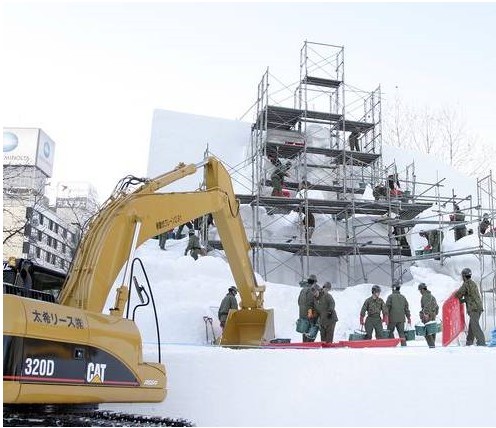
みなさん、この写真は何の 工事の写真だと思いますか?
ビルを 建てる工事ではありません。雪まつりのために雪像を 作っているところです。
私の住んでいる北海道の札幌では、毎年「雪まつり」が 行われます。
この大きな冬のイベント「さっぽろ雪まつり」は今年は2月5日から2月11日までです。
とても有名なお祭りで、今年で59回目になるそうです。
今年の札幌は雪が 少ないので、雪像を作るための雪は 遠くの山など から ダンプカーで 運んできます。大雪像は高さ 30メートルにもなるそうですから、たくさんの雪が 必要ですね。運ばれて来た 雪は クレーンなどの機械を使って 積み上げていってから 固めて、それから削ったり、雪を足したり しながら作っていくそうです。
大雪像だけでなく、小さい雪像もたくさん 作られます。これは作りたい人が 申し込んで、 抽選に 当たった人たちだけが作ることができます。
雪像作りはとても寒くて、大変ですが、たくさんの 観光客が見に来るので、作る人達は頑張るそうです。
あなたもぜひ、冬の札幌へ来て、雪まつりを見てみませんか?
さっぽろ雪まつり 公式サイト
★Kanji with hiragana
ビルを 建(た)てる工事(こうじ)ではありません。雪(ゆき)まつりのために雪像(せつぞう)を 作(つく)っているところです。
私(わたし)の住(す)んでいる北海道(ほっかいどう)の札幌(さっぽろ)では、毎年(まいとし)「雪(ゆき)まつり」が 行(おこな)われます。
この大(おお)きな冬(ふゆ)のイベント「さっぽろ雪(ゆき)まつり」は今年(ことし)は2月(がつ)5日(いつか)から2月(がつ)11日(にち)までです。
とても有名(ゆうめい)なお祭(まつ)りで、今年(ことし)で59回目(かいめ)になるそうです。
今年(ことし)の札幌(さっぽろ)は雪(ゆき)が 少(すく)ないので、雪像(せつぞう)を作(つく)るための雪(ゆき)は 遠(とお)くの山(やま)など から ダンプカーで 運(はこ)んできます。大雪像(だいせつぞう)は高(たか)さ 30メートルにもなるそうですから、たくさんの雪(ゆき)が 必要(ひつよう)ですね。運(はこ)ばれて来(き)た 雪(ゆき)は クレーンなどの機械(きかい)を使(つか)って 積(つ)み上(あ)げていってから 固(かた)めて、それから削(けず)ったり、雪を足(た)したり しながら作(つく)っていくそうです。
大雪像(だいせつぞう)だけでなく、小(ちい)さい雪像(せつぞう)もたくさん 作(つく)られます。これは作(つく)りたい人(ひと)が 申(もう)し込(こ)んで、 抽選(ちゅうせん)に 当(あ)たった人(ひと)たちだけが作(つく)ることができます。
雪像作(せつぞうづく)りはとても寒(さむ)くて、大変(たいへん)ですが、たくさんの 観光客(かんこうきゃく)が見(み)に来(く)るので、作(つく)る人達(ひとたち)は頑張(がんば)るそうです。
あなたもぜひ、冬(ふゆ)の札幌(さっぽろ)へ来(き)て、雪(ゆき)まつりを見(み)てみませんか?
さっぽろ雪まつり 公式サイト
★English translation
What do think is being contructed in this picture ? No, its not a building . Its going to be a snow sculpture for the Sapporo snow festival. In my hometown Sapporo in Hokkaido, there is a snow festival held every year. This huge winter event is being held from February 5th to February 11th this year. It's a very famous festival and this year is going to be its 59th time.
Sapporo had little snow this year, so they are using dump trucks to transport snow from far mountains as well as other places in order to build the sculptures. The bigger pieces can get up to 30 meters high, so I guess they need a lot of snow. They pile up the snow using cranes and other machines until it hardens and then they start to chip away at some places and add snow on others slowly giving the sculptures form.
It is not only about the large designs, there are lots small sculptures built too.People who want to participate, send in an application and then only those who are selected by a lottery get a chance to build their designs.
Snow statues are extremely cold so its no easy task and because so many tourists come to see the sculptures, the artists really work hard at it .
If you get a chance, please try to come to the Sapporo during winter and see the snow festival.
今週(こんしゅう)の語彙(ごい)
This week's vocabulary
■工事(こうじ)
construction
Sapporo had little snow this year, so they are using dump trucks to transport snow from far mountains as well as other places in order to build the sculptures. The bigger pieces can get up to 30 meters high, so I guess they need a lot of snow. They pile up the snow using cranes and other machines until it hardens and then they start to chip away at some places and add snow on others slowly giving the sculptures form.
It is not only about the large designs, there are lots small sculptures built too.People who want to participate, send in an application and then only those who are selected by a lottery get a chance to build their designs.
Snow statues are extremely cold so its no easy task and because so many tourists come to see the sculptures, the artists really work hard at it .
If you get a chance, please try to come to the Sapporo during winter and see the snow festival.
今週(こんしゅう)の語彙(ごい)
This week's vocabulary
■工事(こうじ)
construction
■雪像(せつぞう)
snow statues or sculptures
■行(おこな)われる
be held
■ダンプカー
dump truck
■クレーン
crane
■積(つ)み上(あ)げる
hill, heap
■申(もう)し込(こ)む
apply, enter
■抽選(ちゅうせん)
drawing, lot
■当(あ)たる
fall, come up
■観光客(かんこうきゃく)
tourist, visitor
By ITAYA Sayuri
Learn Japanese Online!
2008/01/07
今年の目標を決めよう。Setting this year's goals!
あけましておめでとうございます。今年もJOIで楽しく日本語の 勉強をしましょう。
みなさんは、日本語を勉強するときどんなことに気をつけていますか。今年は「これ!」と決めた目標はありますか。今日は日本語上達のコツ、連語(collocation) をご紹介します。
記者:知事、今年の抱負をお願(ねが)いします。
宮崎県の知事:昨年は宮崎県を元気にする糸口をつかんだ と思います。私たちは日本全国から注目を浴びています。今年は改革の真価が問われる年です。流れを止めないで、県民の皆さま一人ひとりの視点に立った県づくりを進めたいと思います。
のついた句(phrase)は、結びつきが強くていつも一緒に使われる言葉 でできています。「糸口」は「つかむ」といいますが、「糸口をにぎる」とは言いません。「写真を撮る」「目が覚 める」など、たくさんありますね。この連語関係をしっかり覚(おぼ)えおくと、日本語で何か言いたいとき、言葉がスムーズに出 てきます。
ぜひ、今年の日本語学習のポイントにしてみてください。きっと上達の糸口がつかめますよ!
★Kanji with hiragana
あけましておめでとうございます。今年もJOIで楽(たの)しく日本語(にほんご)の
勉強(べんきょう)をしましょう。
みなさんは、日本語を勉強するときどんなことに気(き)をつけていますか。今年は「これ!」と決めた目標はありますか。今日(きょう)は日本語上達(じょうたつ)のコツ、連語(れんご)(collocation) をご紹介(しょうかい)します。
記者(きしゃ):知事(ちじ)、今年の抱負(ほうふ)をお願(ねが)いします。
宮崎県(みやざきけん)の知事:昨年(さくねん)は宮崎県を元気(げんき)にする糸口(いとぐち)をつかんだ と思(おも)います。私たちは日本全国(ぜんこく)から注目(ちゅうもく)を浴(あ)びています。今年は改革(かいかく)の真価(しんか)が問(と)われる年です。流(なが)れを止(と)めないで、県民(けんみん)の皆(みな)さま一人ひとりの視点(してん)に立(た)った県づくりを進(すす)めたいと思います。
のついた句(く)(phrase)は、結(むす)びつきが強(つよ)くていつも一緒(いっしょ)に使(つか)われる言葉 (ことば)でできています。「糸口」は「つかむ」といいますが、「糸口をにぎる」とは言(い)いません。「写真(しゃしん)を撮(と)る」「目(め)が覚 (さ)める」など、たくさんありますね。この連語関係(かんけい)をしっかり覚(おぼ)えおくと、日本語で何(なに)か言いたいとき、言葉がスムーズに出 てきます。
ぜひ、今年の日本語学習のポイントにしてみてください。きっと上達の糸口がつかめますよ!
★English translation
This is an excerpt from an interview between a reporter and the Miyazaki governor:
Reporter: Governor, what are your ambitions for this new year?
Governor: I think last year Miyazaki prefecture began to discover a new-found reforming energy (genki-ni suru itoguchi-wo tsukanda). We enjoyed a lot of media attention (chuumoku-wo abite imasu) from the rest of the Japan. However, this year is the year when the true value of the reforms will be tested (shinka-ga towareru). I want to continue these reforms with an eye to the viewpoint of the prefectural citizens (shiten-ni tatta).
The underlined phrases are collocations; there are strong connections between the words in these phrases and they are very often used together. We always say, itoguchi-wo tsukamu, not itoguchi-wo nigiru (which would mean the same thing if translated literally). There are many others, for example, shashin-wo toru, to take a picture, or me-wo sameru, to wake up.
If you memorize these collocations and make the connections between the related words, you'll find that expressing yourself in Japanese will come smoothly.Try to make this one of your focus points in studying Japanese this year; you will surely discover a path to better Japanese!
今週(こんしゅう)の語彙(ごい)
This week's vocabulary
■コツ(骨)
物事(ものごと)をうまく行(おこな)うポイント、大事(だいじ)な点(てん)。
a tip, point of advice
■抱負
心(こころ)の中(なか)に持(も)っている決意(けつい)。
aspiration, ambition
■宮崎県の知事
東国原(ひがしこくばる)英夫(ひでお)。タレント出身(しゅっしん)で、
「宮崎県(みやざきけん)ブーム」を引(ひ)き起(お)こした。
The Miyazaki Prefectural Governor Hideo Kokubaru, a comedian turned politician who led the present Miyazaki prefecture boom.
■糸口をつかむ
物事(ものごと)のてがかりがわかること。
「解決(かいけつ)の糸口をつかむ。」
start to understand something, the tip of the solution
物事(ものごと)のてがかりがわかること。
「解決(かいけつ)の糸口をつかむ。」
start to understand something, the tip of the solution
■注目を浴びる
関心(かんしん)を寄(よ)せられること、持(も)たれること。
put into the spotlight, bring to the center of attention
■真価を問う
本当(ほんとう)の価値(かち)があるかどうか試(ため)されること。または、判断(はんだん)されること。
true value brought into question, to be judged
■流れを止める
物事(ものごと)が進(すす)んでいたのを止(と)めること。
stop the flow, break the continuation
■視点に立つ
(ある人や集団(しゅうだん)の)ものを見る立場(たちば)、
観点(かんてん)から考(かんが)えること。
from someone else's viewpoint,
2007/12/29
世相を表す漢字 A Kanji that represents the current social situation
今年はひき肉や有名店のお菓子、高級食材などに「偽りの表示 」が次々と発覚、年金記録や政治資金にもずさんな取り扱いが見つかりました。そして、それらは経済にも悪い影響を与えています。
「一体われわれはなにを信じたらいいのか」、「われわれの誇りであった質の高さはどこへ行ったのか」。国民の怒る気持ちと、こんなことは今年限りにしてくれと願う気持ちが「偽」の選択に込められていると思(おも)います。
ひるがえって、私自身はどうであったか。偽がなかったか。はたして質が高かったか。今年も反省することばかりですが、少し成長の跡も見られます。そして来年も、もう少し成長したいと思っています。
では、皆さん、どうぞよい年をお迎えください。
★Kanji with hiragana
12月(がつ)になると新聞(しんぶん)やテレビが今年(ことし)1年(ねん)を総括(そうかつ)するいろいろな企画(きかく)を行(おこな)いますが、日本(にほん)漢字能力(かんじのうりょく)検定協会(けんていきょうかい)は例年(れいねん)どおり、今年(ことし)の 世相(せそう)を表(あらわ)す漢字(かんじ)を募集(ぼしゅう)しました。今年(ことし)は90,816通(つう)の応募(おうぼ)があり、その18%に当(あ)たる16,550通(つう)が「偽(ぎ)」を選(えら)びました。
今年(ことし)はひき肉(にく)や有名店(ゆうめいてん)のお菓子(かし)、高級食材(こうきゅうしょくざい)などに「偽(いつわ)りの表示(ひょうじ) 」が次々と発覚(はっかく)し、年金記録(ねんきんきろく)や政治資金(せいじしきん)にもずさんな取(と)り扱(あつか)いが見(み)つかりました。そして、それらは経済(けいざい)にも悪(わる)い影響(えいきょう)を与(あた)えています。
「一体(いったい)われわれはなにを信(しん)じたらいいのか」、「われわれの誇(ほこ)りであった質(しつ)の高(たか)さはどこへ行(い)ったのか」。国民(こくみん)の怒(いか)る気持(きも)ちと、こんなことは今年限(ことしかぎ)りにしてくれと願(ねが)う気持(きも)ちが「偽(ぎ)」の選択(せんたく)に込(こ)められていると思(おも)います。
ひるがえって、私(わたし)自身(じしん)はどうであったか。偽(ぎ)がなかったか。はたして質(しつ)が高(たか)かったか。今年(ことし)も反省(はんせい)することばかりですが、少(すこ)し成長(せいちょう)の跡(あと)も見(み)られます。そして来年(らいねん)も、もう少(すこ)し成長(せいちょう)したいと思(おも)っています。
では、皆(みな)さん、どうぞよい年(とし)をお迎(むか)えください。
★English translation
As December came along, while the newspapers and TV stations were busy planning programs to sum up the whole year, the Japanese Kanji Test Association were inviting applications for a Kanji that represents the passing year, for this year as they do every year. This year, out of the 90,816 submissions, 18%, or 16,550, submissions were made for the Kanji which was finally chosen: 'gi' which means 'deceit' or ' false'.
This year, false labeling scandals including ground meat, sweets made by famous shops and luxury food items kept on coming out into the open in the media. Then there were the scandals that emerged involving careless mishandling of pension fund records and political funds. All of this had a negative impact on the economy.
"What are we supposed to believe? Where have all the principles that we held so highly gone?" I think the nation's anger and our plead to "make this year mark the end of these deceitful activities" is shown in this year's choice of 'gi' .
Well then, how about my own feeling about this year? Did I avoid 'gi' in my own life? Did I have year of "quality"? Although there are always areas for self-reflection, I felt that there were some traces of improvement on my part. And next year I would like to improve myself a little bit more.
With that thought, I'd like to bid you all a happy new year.
今週(こんしゅう)の語彙(ごい)
This week's vocabulary
■総括(そうかつ)する
summarize
■日本(にほん)漢字能力(かんじのうりょく)検定協会(きょうかい)
the Japanese Kanji Test Association
■世相(せそう)
social conditions
■募集(ぼしゅう)する
invite
■応募(おうぼ)
application
■偽(ぎ)= 偽(いつわ)り
deceit
■偽(いつわ)りの
false
■発覚(はっかく)する
be detected
■表示(ひょうじ)
display
■年金記録(ねんきんきろく)
pensionary record
■ずさんな
slipshod
■政治資金(せいじしきん)
political fund
■誇(ほこ)り
proud
■質(しつ)
quality
■怒(いか)る
angry
■今(ことし)かぎり
limit it to this year
■選択(せんたく)
selection
■込(こ)める
be charged
■ひるがえって
reversing the sentiment
■反省(はんせい)する
reflect
■跡(あと)
mark
By MOMII Shigefumi
Learn Japanese Online!
2007/12/13
年越し蕎麦
もう今年も終わりですね。皆さんにとって今年はどんな年でしたか?来年はどんな年にしたいですか?
ところで日本では大晦日(12月31日)に『年越し蕎麦』というものが食べられる風習があるのですが、知っていますか。これは年を越す前に食べきらなければならず、残すと翌年、金運に恵まれないなどと言われています。
年越し蕎麦の由来ははっきりしていませんが、 そばの麺が細く長いことから、「細く長く
達者に暮らせるように」と縁起を担いで食べられるようになったという説が一般的です。
皆さんも年越し蕎麦を食べて新しい年を迎えてみてはいかがですか?
★Kanji with hiragana
ところで日本(にほん)では大晦日(おおみそか)(12月31日)に『年(とし)越(こ)し蕎麦(そば)』というものが食(た)べられる風習(ふうしゅう)があるのですが、知(し)っていますか。これは年(とし)を越(こ)す前(まえ)に食(た)べきらなければならず、残(のこ)すと翌年(よくとし)、金運(きんうん)に恵(めぐ)まれないなどと言(い)われています。
年(とし)越(こ)し蕎麦(そば)の由来(ゆらい)ははっきりしていませんが、
そばの麺(めん)が細(ほそ)く長(なが)いことから、「細(ほそ)く長(なが)く
達者(たっしゃ)に暮(く)らせるように」と縁起(えんぎ)を担(かつ)いで食(た)べられるようになっ
たという説(せつ)が一般的(いっぱんてき)です。
皆(みな)さんも年(とし)越(こ)し蕎麦(そば)を食(た)べて新(あたら)しい年(とし)を迎(むか)えてみてはいかがですか?
★English translation
Well the year is over isn't it. How wasthis year for you ? How would you like to spend next year ?
By the way, did you know that in Japan on the last day of the year ( Omisoka ) we have a custom of eating soba ( buckwheat noodles). You have to finish eating these noodles before the year ends, or if you leave any left overs, they say that you cannot have any luck with money during the coming year. The origin of the year end noodles is unclear but the standard explanation is that because soba noodles are long and thin there is a superstition that eating them can be a good omen and bless you with a long and healthy life.
Why don't you try eating year end noodles too this year.
今週(こんしゅう)の語彙(ごい)
This week's vocabulary
■今年(ことし)
this year
■来年(らいねん)
next year, coming year
■年(とし)を越(こ)す
seeing the old year out
今年(ことし)が終(お)わり新(あたら)しい年(とし)を迎(むか)えること
■大晦日(おおみそか)
New Year's Eve
12月31日のこと
■蕎麦(そば)
buckwheat noodles
■風習(ふうしゅう)
custom; convention;manners
昔(むかし)からある風俗(ふうぞく)習慣(しゅうかん)
■食(た)べきる
eat up, eat all
全部(ぜんぶ)食(た)べること
■残(のこ)す
leave
全部(ぜんぶ)の一部(いちぶ)をそのままにして、手(て)をつけないでおくこと
■翌年(よくとし)
the following year
その次(つぎ)の年(とし)
■金運(きんうん)
lucky with money
お金(かね)に関(かん)する運勢(うんせい)
■由来(ゆらい)
the origin, the genesis; the history; the source
物事(ものごと)の起原(きげん)、始(はじ)まり
■麺(めん)
noodle
■達者(たっしゃ)だ
healthy; in good health
元気(げんき)なこと
■暮(く)らす
live; make a [one's] living, earn one's bread
時間(じかん)を過(す)ごすこと
■縁起(えんぎ)を担(かつ)ぐ
be superstitious
■説(せつ)
an opinion, a view
■新(あたら)しい年(とし)を迎(むか)える
greet the New Year
新(あたら)しい年(とし)になること
新(あたら)しい年(とし)になること
By NORITOMI Takako
Learn Japanese Online!
2007/12/09
年賀状 New year's cards
みなさんは年賀状を知っていますか。
年賀状は、友人などから新年に届けられる郵便はがきです。新年の挨拶の言葉と旧年中のお礼や感謝の言葉などを書きます。
最近では、メールなどで送る人も増えてきました。
今年の郵便局のキャッチコピーは「年賀状は贈り物だと思う。」です。私はこの言葉が好きです。
私も送る人のことを考えながら一枚一枚はがきを書いています。いただいた年賀状も大切に保存してあります。友人の近況も知ることができるので、新年にいただく年賀状がとても楽しみです。今年はまだ年賀状を作っていません。毎年、年末までかかって慌てて作っていますが、今年は慌てないように早めに書きたいと思います。
みなさんだったらどんな年賀状を作りたいですか。
★Kanji with hiragana
年賀状(ねんがじょう)は、友人(ゆうじん)などから新年(しんねん)に届(とど)けられる郵便(ゆうび)はがきです。新年(しんねん)の挨拶(あいさつ)の言葉(ことば)と旧年中(きゅうねんちゅう)のお礼(れい)や感謝(かんしゃ)の言葉(ことば)などを書(か)きます。
最近(さいきん)では、メールなどで送(おく)る人(ひと)も増(ふ)えてきました。
今年(ことし)の郵便局(ゆうびんきょく)のキャッチコピーは「年賀状(ねんがじょう)は贈(おく)り物(もの)だと思(おも)う。」です。私(わたし)はこの言葉(ことば)が好(す)きです。
私(わたし)も送(おく)る人(ひと)のことを考(かんが)えながら一枚一枚(いちまいいちまい)はがきを書(か)いています。いただいた年賀状(ねんがじょう)も大切(たいせつ)に保存(ほぞん)してあります。友人(ゆうじん)の近況(きんきょう)も知(し)ることができるので、新年(しんねん)にいただく年賀状(ねんがじょう)がとても楽(たの)しみです。今年(ことし)はまだ年賀状(ねんがじょう)を作(つく)っていません。毎年(まいとし)、年末(ねんまつ)までかかって慌(あわ)てて作(つく)っていますが、今年(ことし)は慌(あわ)てないように早(はや)めに書(か)きたいと思(おも)います。
みなさんだったらどんな年賀状(ねんがじょう)を作(つく)りたいですか。
★English translation
New year's cards
Have you heard of Japanese New Year's cards? New Year's Cards, or nengajou, are postcards we send to close friends and other people over the New Year's season. We write greetings for the new year, as well as messages of thanks for the past year.
Recently, the number of people sending these greetings by email has increased. The advertising slogan this year for the post office's winter campaign is Nengajou-wa okurimono-da to omou, which means "New year's cards are things you give."
(There is a pun with the word okurimono, which means either "things sent" or "things given as gifts". The two meanings of okurimono sound the same, but use different kanji.)
I really like that slogan. When I'm writing nengajou, I take my time with each one, thinking about that person in particular. And when I receive a nengajou, I take care of it and keep all of them. I get to find out about friends' situations and lifestyles, so I really look forward to receiving the cards. I haven't written this year's cards yet. Every year, I always rush to get them done before the year ends, but this year I'm determined to get them done early and avoid the panic.
Do you have a similar culture in your country? Or, if not, are you going to send some Japanese New Year's cards this year?
今週(こんしゅう)の語彙(ごい)
This week's vocabulary
■旧年中(きゅうねんちゅう)
昨年(さくねん)、去年(きょねん) last year
■感謝(かんしゃ)
ありがとうと思(おも)う気持(きもち) thanks, gratitude
■キャッチコピー
人(ひと)の心(こころ)に届(とど)く短(みじか)くて覚(おぼ)えやすい言葉(ことば)
An advertising slogan, catch-copy
■近況(きんきょう)
最近(さいきん)あったこと the current situation,the present condition
■慌(あわ)てて
慌(あわ)てる 準備(じゅんび)ができていなくて思(おも)うように動(うご)けないこと
to panic, rush
Learn Japanese Online!
2007/12/03
忘年会
12月に入り、忘年会の季節がやって来ました。
忘年会は「*その年の苦労を忘れるために年末に催す宴会」です。一年を振り返ると同時に、新しい年に向けて気持ちを前向きにするという意味から、普段の飲み会よりも盛大に行われることが多いです。
忘年会をとりしきる幹事は、限られた予算で店や料理を選び、余興などを企画しなければなりません。会社の忘年会では若手社員がこの大役を任されることがよくあります。企画力や実行力が試される場でもあり、一種の通過儀礼になっているようです。
今年、忘年会の予定がありますか?
忘年会のあとにはお正月の宴を控え、日本の年末年始は宴会続きになりますが、あなたの国ではいかがですか?
*Yahoo辞書(大辞林)より
★Kanji with hiragana
12月(がつ)に入(はい)り、忘年会(ぼうねんかい)の季節(きせつ)がやって来(き)ました。
忘年会(ぼうねんかい)は「*その年(とし)の苦労(くろう)を忘(わす)れるために年末(ねんまつ)に催(もよお)す宴会(えんかい)」です。一年(いちねん)を振(ふ)り返(かえ)ると同時(どうじ)に、新(あたら)しい年(とし)に向(む)けて気(き)持(も)ちを前向(まえむ)きにするという意味(いみ)から、普段(ふだん)の飲(の)み会(かい)よりも盛大(せいだい)に行(おこな)われることが多(おお)いです。
忘年会(ぼうねんかい)をとりしきる幹事(かんじ)は、限(かぎ)られた予算(よさん)で店(みせ)や料理(りょうり)を選(えら)び、余興(よきょう)などを企画(きかく)しなければなりません。会社(かいしゃ)の忘年会(ぼうねんかい)では若手(わかて)社員(しゃいん)がこの大役(たいやく)を任(まか)されることがよくあります。企画力(きかくりょく)や実行力(じっこうりょく)が試(ため)される場(ば)でもあり、一種(いっしゅ)の通過儀礼(つうかぎれい)になっているようです。
今年(ことし)、忘年会(ぼうねんかい)の予定(よてい)がありますか?
忘年会(ぼうねんかい)のあとにはお正月(しょうがつ)の宴(うたげ)を控(ひか)え、日本(にほん)の年末年始(ねんまつねんし)は宴会(えんかい)続(つづ)きになりますが、あなたの国(くに)ではいかがですか?
*Yahoo辞書(大辞林)より
★English translation
Year End Parties
We've entered the month of December, and the Bou Nen Kai (Year End Party) season is upon us. Bou Nen Kai are held at the end of the year in order to get everyone to forget the various hardships that we had during the year. We look back over the past year and at the same time look forward to the new year and because it is done with a positive feeling.
the event is often grander than the usual drinking parties.
The Event Coordinator that sets up the Bou Nen Kai event has to choose a venue with food and plan for some side entertainment within a limited budget. Within companies, this big responsibilty is usually left up to younger members. It is often seen as a test of planning and the ability to get things done, and it seems to have become a kind of rite of passage.
Do you have any plans for this year's Bou Nen Kai? After the Bou Nen Kai parties come the New Year Parties, so in Japan, the end of the year and the beginning of the year are a continuous drinking party season. Is it the same in your country?
Please add your comment.
今週(こんしゅう)の語彙(ごい)
This week's vocabulary
■気持(きも)ちを前向(まえむ)きにする
物事(ものごと)を積極的(せっきょくてき)に考(かんが)えるようにする。Think positively, do something positively
■幹事(かんじ)
催(もよお)し物(もの)を計画(けいかく)し準備(じゅんび)する人(ひと)。The Event Coordinator
■余興(よきょう)
宴会(えんかい)などをより楽(たの)しくさせるための演芸(えんげい)。アトラクション。A side show; an entertainment;
■若手社員(わかてしゃいん)
会社(かいしゃ)の中(なか)で年齢(ねんれい)が若(わか)いほうの社員(しゃいん)。Young company workers, freshmen
■大役(たいやく)を任(まか)される
重要(じゅうよう)な役割(やくわり)を、責任(せきにん)を持(も)ってするよう頼(たの)まれる。Leave this duty to someone, give them a responsibility
■通過儀礼(つうかぎれい)
人(ひと)が一生(いっしょう)の間(あいだ)の大切(たいせつ)な節目(ふしめ)を通(とお)り過(す)ぎるときに行(おこな)う儀礼(ぎれい)。
A rite of passage
■~続(つづ)き
名詞(めいし)について、前(まえ)からの状態(じょうたい)が変(か)わらないことを表(あらわ)す。「幸運(こううん)続(つづ)き」「不(ふ)作(さく)続(つづ)き」など。A continuation,
Learn Japanese Online!
2007/11/25
こたつ The kotatsu
みなさん、寒さ対策はどのようにしていますか?
我が家では今年も「こたつ」が登場しました。
「こたつ」は、日本(にほん)の暖房器具のひとつです。
机の裏に熱源があって、その上に布団をかけます。そして布団の中に足を入れて暖(だん)をとります。
こたつに入りながら、みかんを食べるのは冬の醍醐味でしょう。
暖かいこたつに入りながら、冷たいアイスクリームを食べるのもお勧めです。
わたしにとってこたつは冬の必需品です。
みなさんにとって冬の必需品は何ですか?
★Kanji with hiragana
最近(さいきん)、朝晩(あさばん)寒(さむ)くなってきました。
みなさん、寒さ対策(たいさく)はどのようにしていますか?
我(わ)が家(や)では今年も「こたつ」が登場(とうじょう)しました。
「こたつ」は、日本(にほん)の暖房(だんぼう)器具(きぐ)のひとつです。
机の裏(うら)に熱源(ねつげん)があって、その上に布団(ふとん)をかけます。そして布団の中に足を入れて暖(だん)をとります。
こたつに入りながら、みかんを食べるのは冬の醍醐味(だいごみ)でしょう。
暖かいこたつに入りながら、冷たいアイスクリームを食べるのもお勧(すす)めです。
わたしにとってこたつは冬の必需品(ひつじゅひん)です。
みなさんにとって冬の必需品は何ですか?
★English translation
Recently the mornings and evenings have gotten colder. What measures do you take to counter the cold? This year (as with every year) in our house it is again time to bring out the kotatsu.
A kotatsu is one of Japan's heating instruments. It is a table with a heater underneath it and a blanket covering it. You can get warm by putting your legs under the blanket.
Having a mikan (Japanese tangerine) while sitting under the kotatsu is one of the true pleasures of winter. I really recommend trying ice cream as well.
It is one of my essentials for winter. Could you write a comment about your winter essentials?
今週(こんしゅう)の語彙(ごい)
This week's vocabulary
■こたつ
a kotatsu; a low, covered table with a heat source underneath
■寒さ対策(たいさく)
measures for the cold
■我(わ)が家(や)
my house
my house
■登場(とうじょう)します
appear
appear
■暖房器具(だんぼうきぐ)
a heating apparatus (system)
■~のひとつ
one of ~
one of ~
■裏(うら)
the reverse side; the back
■熱源(ねつげん)
a heat source
a heat source
■暖(だん)をとる
warm oneself
warm oneself
■~ながら
while
while
■醍醐味(だいごみ)
the real pleasure
the real pleasure
■お勧(すす)め
recommendation
recommendation
■必需品(ひつじゅひん)
a necessity
a necessity
By IWAKI Naoko
Learn Japanese Online!
2007/11/04
好きな季節はいつですか。 Which season do you like ?
11月に入りました。2007年も、あと2ヶ月になりましたね。
今年の夏は本当に暑さが厳しかった ですが、
私の住んでいる京都も、ようやく涼しくなってきました。
私の一番好きな季節は秋です。
木の葉もだんだん赤く色づいてきて、公園を散歩していると
目を楽しませてくれます。
例年に比べて、今年の紅葉はかなり遅いらしく、
楽しめる期間も短いようです。
あっという間に冬の到来です。
それまでに、大好きな秋を満喫しようと思(おも)います。
みなさんの好きな季節はいつですか。
★Kanji with hiragana
11月に入りました。2007年も、あと2ヶ月になりましたね。
今年(ことし)の夏(なつ)は本当(ほんとう)に暑(あつ)さが厳(きび)しかった ですが、
私の住(す)んでいる京都(きょうと)も、ようやく涼(すず)しくなってきました。
私の一番(いちばん)好(す)きな季節(きせつ)は秋(あき)です。
木(こ)の葉(は)もだんだん赤(あか)く色(いろ)づいてきて、公園(こうえん)を散歩(さんぽ)していると
目(め)を楽(たの)しませてくれます。
例年(れいねん)に比(くら)べて、今年(ことし)の紅葉(こうよう)はかなり遅(おそ)いらしく、
楽(たの)しめる期間(きかん)も短(みじか)いようです。
あっという間(ま)に冬(ふゆ)の到来(とうらい)です。
それまでに、大好(だいす)きな秋(あき)を満喫(まんきつ)しようと思(おも)います。
みなさんの好きな季節(きせつ)はいつですか。
★English translation
It's November. 2007 has only 2 months left.This year's summer heat was really tough, but whereI live in Kyoto, it has begun to cool down at last.
My favorite season is autumn. The leaves on the trees are gradually changing to red, so I have a visual treat as I take a walk in the park.
Apparently, compared to an average year, this year's autumn leaves are quite late, so we have only a short time to enjoy them. Winter will be here before you know it. Until then I plan to get the most out my favorite autumn.
Which season do you like the best?
今週(こんしゅう)の語彙(ごい)
This week's vocabulary
My favorite season is autumn. The leaves on the trees are gradually changing to red, so I have a visual treat as I take a walk in the park.
Apparently, compared to an average year, this year's autumn leaves are quite late, so we have only a short time to enjoy them. Winter will be here before you know it. Until then I plan to get the most out my favorite autumn.
Which season do you like the best?
今週(こんしゅう)の語彙(ごい)
This week's vocabulary
■厳(きび)しい
ひどい・大変(たいへん)terrible , tough , strict
■ようやく
やっとat last , finally
■木(こ)の葉(は)
木(き)の葉(は) leaves
■色(いろ)づく/紅葉(こうよう)
色(いろ)が変(か)わる・木の葉が赤(あか)や黄(き)になる to change color
■目(め)を楽(たの)しませる
見ていると、楽しい気持ちになる a pleasure for the eyes,a visual treat
■例年(れいねん)
いつもの年、毎年(まいとし)an average year, a typical year
■あっという間(ま)
とても短(みじか)い間(あいだ) a very short time, a moment, before you know it
■到来(とうらい)
来(く)るto arrive
■満喫(まんきつ)する
十分(じゅうぶん)に楽(たの)しむことenjoy something to its fullest, until you are satisfied
By ARASE Masako
Learn Japanese Online!
2007/10/28
広辞苑 The Koujien Dictionary
みなさんは、広辞苑という本を知っていますか?
広辞苑は日本で有名な辞書の一つです。
このたび、この辞書の 改訂が行われました。10年ぶりだそうです。今回の改訂では、「とても」と同じ意味の「めっちゃ」や、「うざったい」ということばからできた「ウザい」など主に若者が使うことばも載っているそうです。
私が大学でならった先生は、辞書づくりに 関わったことのある先生でした。どういうことばを辞書に取り上げるかは、言語使用調査というものを参考にして決めるそうです。 地域や年齢を問わず、 幅広く使われている語を選そうです。
いろいろな国の生徒様が参加している「JOI」。
「JOI」ということばも、いつか辞書に載る日が来るのでしょうか…。
★Kanji with hiragana
みなさんは、広辞苑(こうじえん)という本を知っていますか?
広辞苑(こうじえん)は日本で有名(ゆうめい)な辞書(じしょ)の一つです。
このたび、この辞書(じしょ)の 改訂(かいてい)が行(おこな)われました。10年ぶりだそうです。今回の改訂(かいてい)では、「とても」と同(おな)じ意味(いみ)の「めっちゃ」や、「うざったい」ということばからできた「ウザい」など主(おも)に若者(わかもの)が使(つか)うことばも載(の)っているそうです。
私が大学でならった先生は、辞書(じしょ)づくりに 関(かか)わったことのある先生でした。どういうことばを辞書(じしょ)に取り上げるかは、言語使用調査(げんごしようちょうさ)というものを参考(さんこう)にして決(き)めるそうです。 地域(ちいき)や年齢(ねんれい)を問(と)わず、 幅広(はばひろ)く使(つか)われている語(ご)を選(えらぶ)そうです。
いろいろな国の生徒様(せいとさま)が参加(さんか)している「JOI」。
「JOI」ということばも、いつか辞書(じしょ)に載(の)る日が来るのでしょうか…。
★English translation
Have you heard of the Koujien Dictionary? The Koujien Dictionary is one of the most famous dictionaries in Japan.
Recently , this dictionary was revised. It has been 10 years since this was last done. In the new revision they have put in some new words used by young people—for example, "meccha", meaning the same thing as "very" or "totemo". And from the word "uzattai", which means "annoying", there is a new trendy word "uzai!", which roughly translates to the slang, "you're bugging me!"
One of the professors who taught me at university, had the experience of being involved in compiling words for a dictionary. Apparently in order to decide which words get inserted in the dictionary there was a word usage survey done. Regardless of geographic area or age of the users, words which are the most widely used are chosen.
With so many students from so many countries learning at JOI, wouldn't it be great if one day the phrase JOI also got included?
今週(こんしゅう)の語彙(ごい)
This week's vocabulary
■改訂(かいてい)
revision
■うざったい
annoying
■載(の)る
get into (the papers)
■関(かか)わる
be concerned, be involved in
■地域(ちいき)
a region, an area
■幅広(はばひろ)い
wide, broad
★文法(ぶんぽう)のポイント
■N1というN2:N1 called N2
■Nを問(と)わず:irrespective of
Learn Japanese Online!
広辞苑は日本で有名な辞書の一つです。
このたび、この辞書の 改訂が行われました。10年ぶりだそうです。今回の改訂では、「とても」と同じ意味の「めっちゃ」や、「うざったい」ということばからできた「ウザい」など主に若者が使うことばも載っているそうです。
私が大学でならった先生は、辞書づくりに 関わったことのある先生でした。どういうことばを辞書に取り上げるかは、言語使用調査というものを参考にして決めるそうです。 地域や年齢を問わず、 幅広く使われている語を選そうです。
いろいろな国の生徒様が参加している「JOI」。
「JOI」ということばも、いつか辞書に載る日が来るのでしょうか…。
★Kanji with hiragana
みなさんは、広辞苑(こうじえん)という本を知っていますか?
広辞苑(こうじえん)は日本で有名(ゆうめい)な辞書(じしょ)の一つです。
このたび、この辞書(じしょ)の 改訂(かいてい)が行(おこな)われました。10年ぶりだそうです。今回の改訂(かいてい)では、「とても」と同(おな)じ意味(いみ)の「めっちゃ」や、「うざったい」ということばからできた「ウザい」など主(おも)に若者(わかもの)が使(つか)うことばも載(の)っているそうです。
私が大学でならった先生は、辞書(じしょ)づくりに 関(かか)わったことのある先生でした。どういうことばを辞書(じしょ)に取り上げるかは、言語使用調査(げんごしようちょうさ)というものを参考(さんこう)にして決(き)めるそうです。 地域(ちいき)や年齢(ねんれい)を問(と)わず、 幅広(はばひろ)く使(つか)われている語(ご)を選(えらぶ)そうです。
いろいろな国の生徒様(せいとさま)が参加(さんか)している「JOI」。
「JOI」ということばも、いつか辞書(じしょ)に載(の)る日が来るのでしょうか…。
★English translation
Have you heard of the Koujien Dictionary? The Koujien Dictionary is one of the most famous dictionaries in Japan.
Recently , this dictionary was revised. It has been 10 years since this was last done. In the new revision they have put in some new words used by young people—for example, "meccha", meaning the same thing as "very" or "totemo". And from the word "uzattai", which means "annoying", there is a new trendy word "uzai!", which roughly translates to the slang, "you're bugging me!"
One of the professors who taught me at university, had the experience of being involved in compiling words for a dictionary. Apparently in order to decide which words get inserted in the dictionary there was a word usage survey done. Regardless of geographic area or age of the users, words which are the most widely used are chosen.
With so many students from so many countries learning at JOI, wouldn't it be great if one day the phrase JOI also got included?
今週(こんしゅう)の語彙(ごい)
This week's vocabulary
■改訂(かいてい)
revision
■うざったい
annoying
■載(の)る
get into (the papers)
■関(かか)わる
be concerned, be involved in
■地域(ちいき)
a region, an area
■幅広(はばひろ)い
wide, broad
★文法(ぶんぽう)のポイント
■N1というN2:N1 called N2
■Nを問(と)わず:irrespective of
Learn Japanese Online!
2007/10/07
略語 Abbreviations
「デジカメ」「シネコン」「就活」「駐禁」・・・これらは略語です。
元の語は、「デジタルカメラ」「シネマコンプレックス」「就職活動」「駐車禁止」です。
カタカナの略語は長い外来語を省略したものが多いですが、そうじゃないものもあります。
例えば、「ケータイ」は「携帯電話(けいたいでんわ→ケータイデンワ)」、「デパチカ」は「デパートの地下食品売り場」です。
最近では、「HK」→「話かわるけど(Hanashi Kawaru kedo)」など、若い人の間でアルファベットを使った略語も使われるようですが、元の語が全く連想できないですね。
★Kanji with hiragana
「デジカメ」「シネコン」「就活(しゅうかつ)」「駐禁(ちゅうきん)」・・・これらは略語(りゃくご)です。
元(もと)の語(ご)は、「デジタルカメラ」「シネマコンプレックス」「就職活動(しゅうしょくかつどう)」「駐車禁止(ちゅうしゃきんし)」です。
カタカナの略語(りゃくご)は長(なが)い外来語(がいらいご)を省略(しょうりゃく)したものが多(おお)いですが、そうじゃないものもあります。
例(たと)えば、「ケータイ」は「携帯電話(けいたいでんわ→ケータイデンワ)」、「デパチカ」は「デパートの地下食品売り場(ちかしょくひんうりば)」です。
最近(さいきん)では、「HK」→「話(はなし)かわるけど(Hanashi Kawaru kedo)」など、若(わか)い人(ひと)の間(あいだ)でアルファベットを使(つか)った略語(りゃくご)も使(つか)われるようですが、元(もと)の語(ご)が全(まった)く連想(れんそう)できないですね。
★English translation
「デジカメ」Dejikame, 「シネコン」Cinecon, 「就活(しゅうかつ)」shuukatsu, 「駐禁(ちゅうきん)」Chuukin ....these are all abbreviations.
The original words are 、「デジタルカメラ」 Digital Camera 「シネマコンプレックス」Cinema Complex 「就職活動(しゅうしょくかつどう)」Job-hunting 「駐車禁止(ちゅうしゃきんし)」No Parking permitted.
Many Katakana abbreviations are from long foreign and imported words which are shortened, but there are some katakana abbreviations which are not like this.
For example. 、「ケータイ」 Keitai stands for 携帯電話 keitai denwa or a cellular phone
デパチカ Depachika stands for a Department store's basement food stuffs sales area.
Recently there are words like HK,which stands for "Hanashi kawaru kedo" or " Changing the subject ..."etc. Amongyoung people, alphabet abbreviations like these are being used and it is getting really difficult to make the association between the original word and the abbreviation !
今週(こんしゅう)の語彙(ごい)
This week's vocabulary
■略語(りゃくご)
語形(ごけい)の一部(いちぶ)を省(はぶ)いて簡略(かんりゃく)にした語(ご)。
an abbreviation
■シネマコンプレックス
cinema complex
■就職活動(しゅうしょくかつどう)
job hunting
■駐車禁止(ちゅうしゃきんし)
No Parking
■外来語(がいらいご)
a word of foreign origin; a loanword; a borrowed word
■連想(れんそう)
ある事柄(ことがら)から、それと関連(かんれん)のある事柄(ことがら)を思(おも)い浮(う)かべること。An association
( Sun 2007/10/07)
By IKURA Tokiko
Learn Japanese Online!
Subscribe to:
Posts (Atom)